Ten Years Ago: Status Quo Disruptus

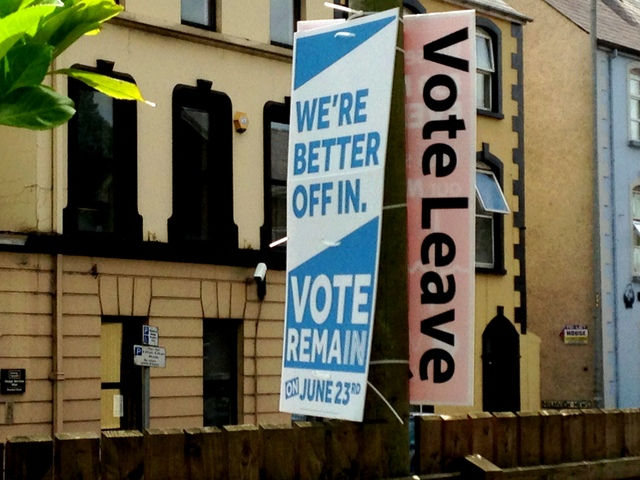
Ten years ago today I boarded a flight at Heathrow after working for a few days with a client in London. The city was draped with signs encouraging voters to choose Remain. Based on a handful of lunchtime conversations as well as everything I’d read in the weeks leading up to the election, I fully expected the UK to stay in the EU.
When my flight touched down in Newark, I flipped on my phone and learned that the world had changed while we crossed the Atlantic. The England I never visited, the one outside my bubble of professional services firms and cosmopolitan news sources, had spoken loudly and clearly.
I immediately thought of my old boss and mentor Joseph Nye, one of the foremost foreign policy minds of the generation that came of age during the Cold War. Nye had written extensively about the “thickening” of globalization, but he was wise enough to know that it could thin out. He was fond of citing Norman Angell’s The Great Illusion, which argued in 1910 that the cost of modern warfare was so high that a future European war wasn’t likely. As I waited to get off the plane, I drafted a one-line email to him: “Something just cracked.”
Something was cracking at home too. Donald Trump had destroyed the Republican field in the primaries. At the time, I interpreted this as good news for Hillary Clinton’s prospects in November. The candidates that concerned me the most — particularly Scott Walker and Ted Cruz — had been knocked out of the race by someone who was unelectable.
I was oblivious to the small clues that were popping up around me. Around that same time, an elderly man wearing a red cap with a jingoistic slogan on it parked himself in a lawn chair on a sidewalk in downtown Princeton with a Trump sign. My neighbor who owns a landscaping firm told me one day that he had always hated politics, but that Donald Trump had opened his eyes. I asked why. He pointed to his all-immigrant crew hard at work and said, “These guys are robbing you and me blind.”
It’s easy to look back and piece together these anecdotes and other fragments of information into a cohesive narrative about why things turned out the way they did. I think of my wife’s grandfather telling the story of the family fleeing their comfortable life in Vienna after Kristallnacht. “These were our friends and neighbors,” he said, recalling his inability to believe that people he had known for years would side with the Nazis.
Status quo bias is a stubborn habit. We expect today’s world to be the same as yesterday’s. When it’s not, we have to update our priors, as the probability crowd likes to say—we must account for new information rather than ignoring or rationalizing it. Failure to do so leaves us feeling upended when things turn out differently than we expected. It’s a lesson I keep learning over and over again.


Comments